
Aug 21, 2026Industry Applications
Automotive Plastics: Material Selection for Vehicle Components
A practical overview of selecting PP, ABS, PA6/PA66, PC/ABS and modified PA for automotive interior, exterior, electrical and under-the-hood components.
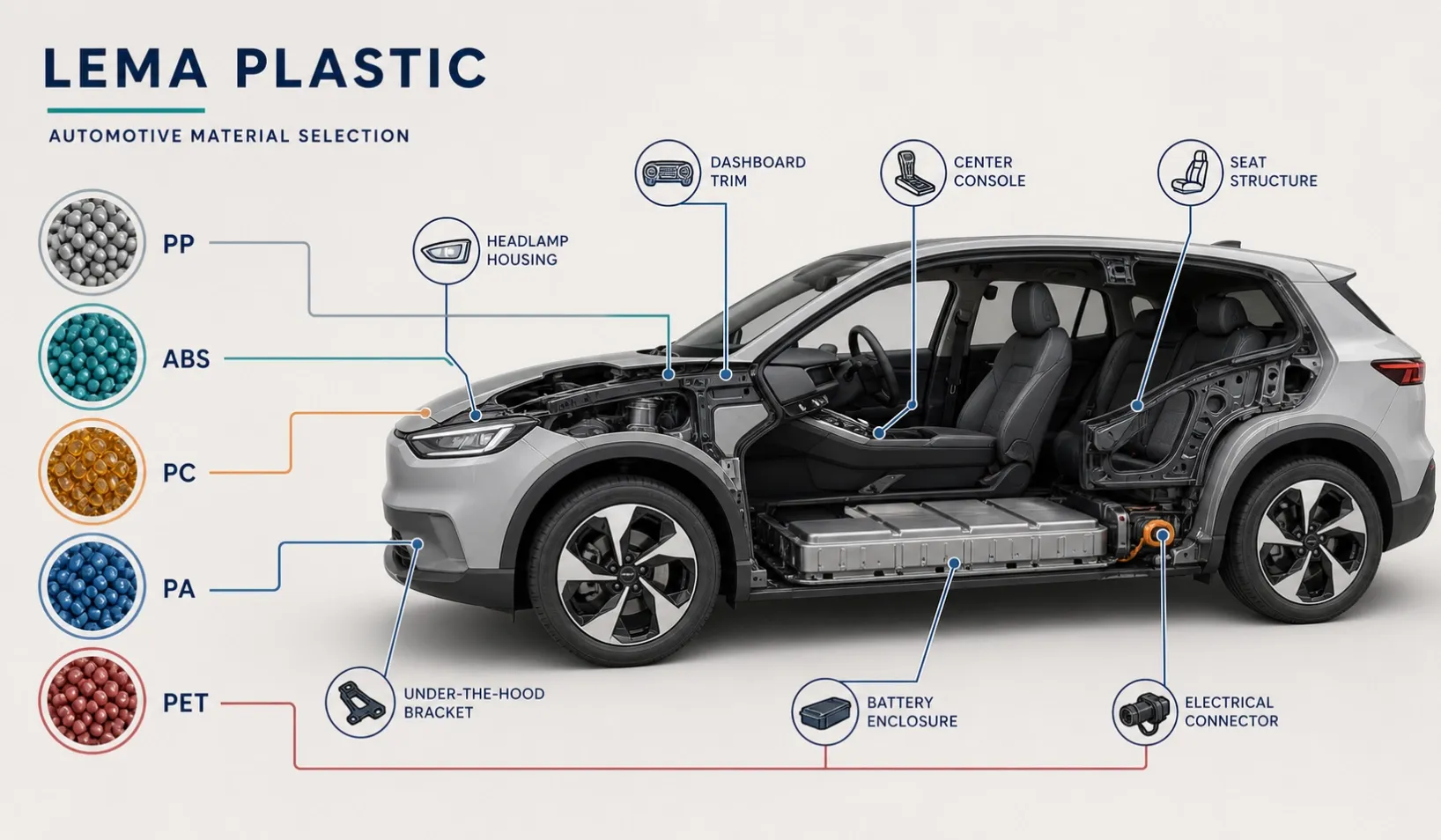
Automotive plastics help manufacturers reduce vehicle mass, combine functions and achieve reliable performance across interior, exterior, electrical and under-the-hood components. The right material is selected by matching service conditions, appearance targets, regulations and processing requirements—not by using one resin for every part.
Why Material Selection Matters
Automotive components may be exposed to cabin heat, vibration, impact, cleaning chemicals, oils, moisture, UV light or electrical loading. Defining these conditions early helps engineers compare materials, reduce redesign risk and select a molding solution that can be produced consistently.
Common Automotive Plastics and Where They Fit
PP for Large, Lightweight Parts
Polypropylene is commonly considered for bumpers, door-panel substrates, battery cases and interior trim where low density, chemical resistance and efficient molding are priorities. Mineral-filled or impact-modified PP grades can be evaluated when a higher level of stiffness or low-temperature impact performance is required.
ABS for Appearance-Critical Trim and Housings
ABS provides a practical balance of impact strength, rigidity and surface quality. It is widely used for dashboard trim, air-vent surrounds, console components and visible molded housings where a clean finish matters alongside mechanical performance.
PA6/PA66 for Heat, Strength and Wear Resistance
PA6 and PA66 are suitable for brackets, clips, air-intake components, connectors and other engineering parts that require strength, heat resistance and abrasion resistance. Glass-fiber-reinforced grades are often used where improved stiffness and dimensional stability are needed.
PC/ABS for Durable Interior and Electrical Housings
PC/ABS combines the impact and heat resistance of polycarbonate with the moldability and surface quality of ABS. Typical applications include instrument-panel trim, center consoles, infotainment housings and electrical enclosures. Flame-retardant grades may be considered when relevant electrical safety requirements apply.
Modified PA for Demanding Applications
Modified PA compounds can be formulated with glass fiber, carbon fiber, flame-retardant, halogen-free or high-CTI technologies. They are relevant for reinforced structural components, electrical connectors and EV applications where standard PA performance is not sufficient.
A Practical Material Selection Checklist
Before selecting a resin, define:
- Operating temperature and heat-aging requirements
- Impact, stiffness and dimensional-stability targets
- Exposure to oils, cleaners, moisture and UV
- Electrical, flame-retardant or CTI requirements
- Surface appearance, color and texture needs
- Processing route, part geometry, tolerance and annual volume
From Resin to Finished Component
Material performance also depends on compounding, drying, mold design and process control. A resin with suitable data on paper can underperform if moisture control, melt conditions, fiber orientation or part design are not appropriate. Early discussion between the material supplier, molder and component designer helps prevent avoidable iteration.
Related Materials for Automotive Applications
Modified PA Compounds — for reinforced automotive parts, EV connectors and demanding electrical applications.
Contact LEMA PLASTIC to discuss the material grade, processing method and target performance for your automotive component.