Oct 9, 2026Material Guides
PMMA vs Polycarbonate: Which Clear Plastic Is Better for Outdoor Lighting and Sheets?
Compare PMMA and polycarbonate for outdoor lighting, transparent sheets and protective covers. Review clarity, impact resistance, weathering and processing trade-offs.
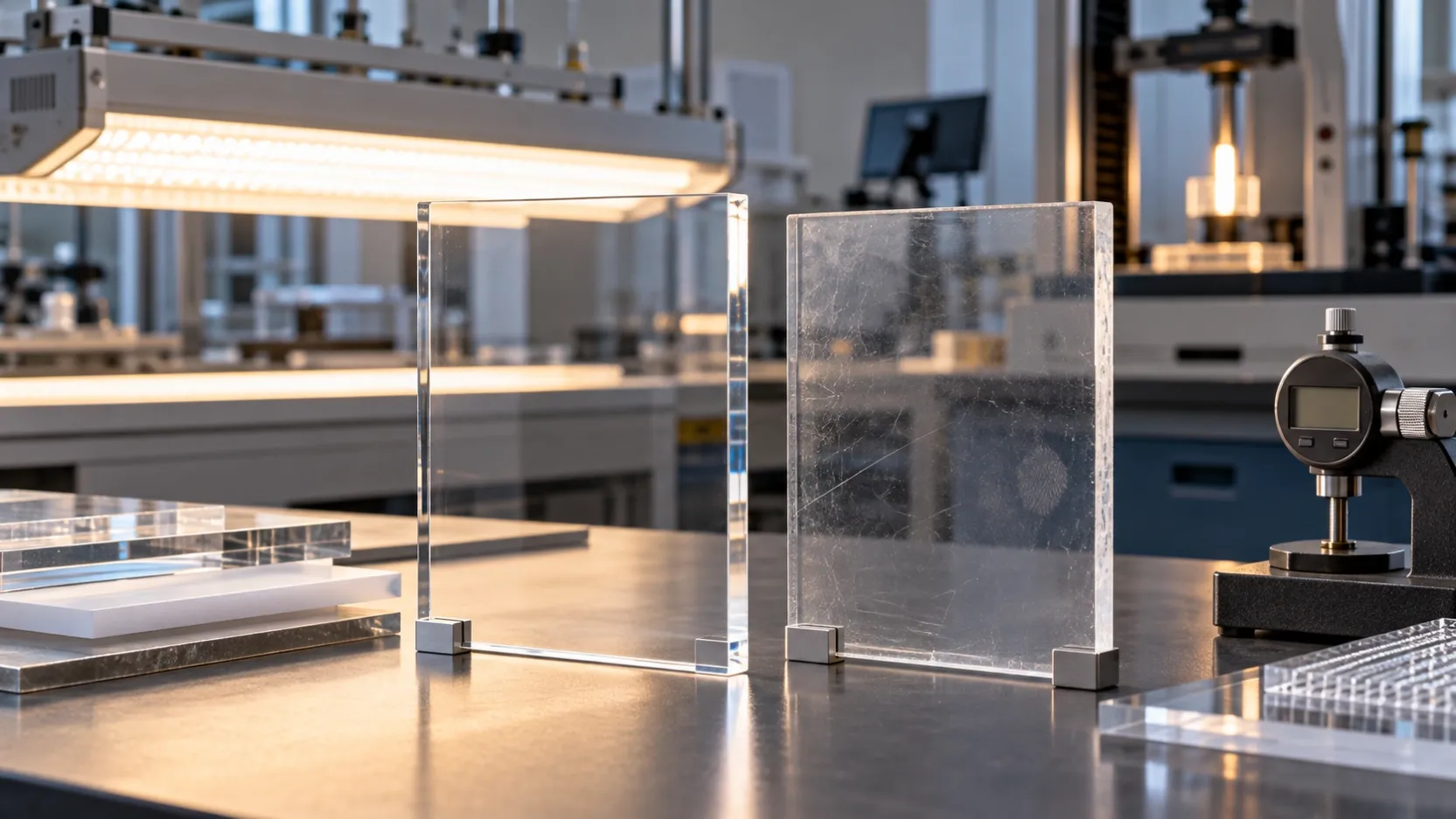
When a project needs a clear plastic material, buyers often begin with the same question: PMMA or polycarbonate?
Both materials can be used for transparent parts, lighting components, sheets and protective covers. But they solve different problems. Choosing by price or appearance alone can lead to cracking, yellowing, surface damage, molding defects or unnecessary material cost.
This guide compares PMMA and polycarbonate in practical terms for importers, converters and product designers.
The Quick Answer
Choose PMMA when optical clarity, surface appearance and weather resistance are your leading priorities.
Choose polycarbonate (PC) when impact resistance, toughness and resistance to accidental breakage matter more than maximum surface hardness or optical appearance.
The final choice depends on part thickness, outdoor exposure, impact risk, processing method and the appearance standard of the finished product.
PMMA: When Clarity and Surface Appearance Matter Most
PMMA, often called acrylic, is widely considered when the part needs a clean, glossy and transparent appearance.
Typical evaluation areas include:
- Lighting covers and decorative light components
- Transparent display panels
- Outdoor signage and architectural panels
- Clear sheets and formed parts
- Cosmetic and consumer-product components
PMMA is often selected when buyers want high transparency and a hard-looking surface. However, every grade should be reviewed against the actual impact requirement, processing method and outdoor-use conditions.
Polycarbonate: When Toughness Is the Priority
Polycarbonate is commonly evaluated for transparent products that may experience impact, handling stress or accidental drops.
Typical applications include:
- Protective covers and machine guards
- Safety-oriented transparent components
- Electronic and appliance parts
- Lighting components requiring higher impact tolerance
- Industrial housings and covers
PC can be an attractive option when breakage risk is a major concern. But the finished part still depends on grade selection, drying, mold design, wall thickness and processing conditions.
PMMA vs PC: A Practical Comparison
Decision Factor | PMMA | Polycarbonate |
|---|---|---|
Transparency and gloss | Often prioritized for high-clarity appearance | Transparent grades are available |
Surface appearance | Commonly selected for a hard, glossy look | May require additional surface-protection considerations |
Impact tolerance | Must be evaluated carefully for impact-prone use | Often chosen where higher toughness is required |
Outdoor use | Often evaluated for weather-exposed clear parts | Grade-specific weathering performance must be confirmed |
Processing | Extrusion and injection grades are available | Drying and process control are especially important |
Typical buyer question | “How clear and scratch-resistant will it look?” | “Will it resist impact and handling damage?” |
This table is a starting point—not an approval standard. Always validate the chosen grade using current TDS, COA and a production trial.
Five Questions to Ask Before Selecting the Material
1. Is the part mainly decorative, structural or protective?
A decorative lighting panel and a machine safety cover may both be transparent, but their material priorities are very different.
2. Will the part be used outdoors?
Confirm expected UV exposure, weather cycles, part thickness and any required colour-retention expectations. Do not assume all grades in the same material family perform identically outdoors.
3. What kind of impact will the part face?
Consider transport, installation, everyday handling, vibration and accidental impact—not only laboratory values.
4. Is surface appearance critical?
For visible parts, define acceptable levels of haze, flow marks, scratches, gloss variation and colour variation before choosing the resin.
5. Which process will be used?
Extrusion, injection molding, thermoforming and machining can each affect the preferred grade. Share your equipment and part design with the resin supplier before ordering.
Final Takeaway
There is no universal “best” clear plastic. PMMA and polycarbonate are selected for different reasons.
Use PMMA when your project puts clarity, glossy appearance and weather-focused performance first. Evaluate PC when impact resistance and toughness are more important. For critical parts, request a current TDS and COA, then run a trial using your own process conditions.
Request a Clear-Plastic Material Review
Lema Plastic can help you compare PMMA and PC grades for sheets, lighting parts, covers and transparent molded components. Send your application, process, thickness, destination market and expected order volume for a practical material recommendation.