Aug 25, 2026Material Guides
Why Does Polycarbonate Turn Yellow? Causes, Prevention & Grade Selection
PC yellowing can reduce optical clarity and trigger customer complaints. Learn the main causes, how to diagnose them, and how to choose the right grade for the application.
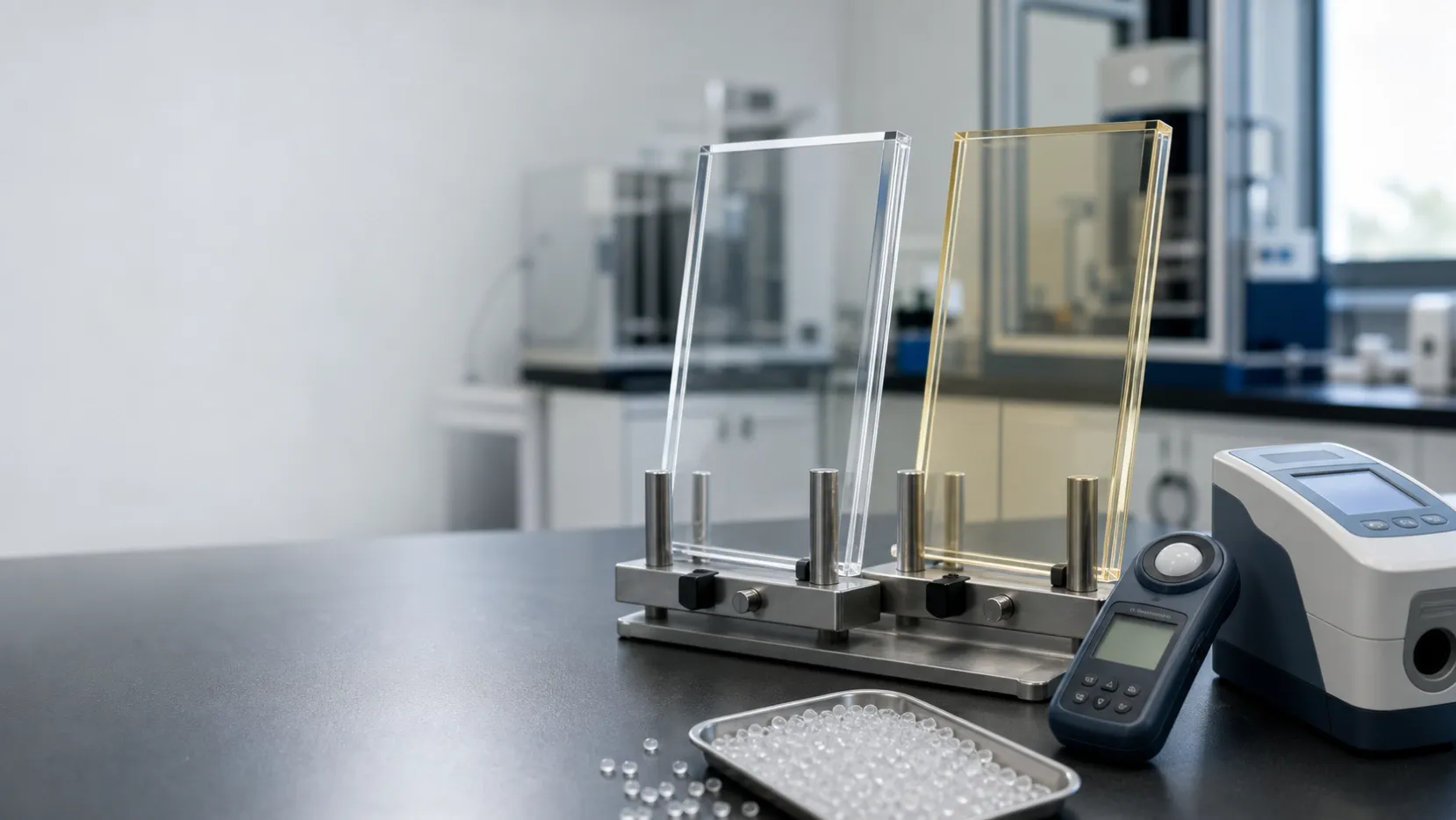
Polycarbonate should not be treated as a single, interchangeable material. When a clear PC part turns yellow, the root cause can sit in processing, the service environment, or the material specification. A useful investigation starts with the part history and the grade's TDS — not with an assumption that the supplier alone is at fault.
This guide gives purchasing and processing teams a practical way to isolate the cause and prevent the next complaint.
The Chemistry: What Actually Happens When PC Turns Yellow
Yellowing is usually a visible sign of chemical change in the polymer or its additives. It may reduce clarity, alter appearance, and become especially noticeable in optical, lighting, display, and transparent housing applications. Use a consistent color-control method, such as a documented Yellowness Index procedure, when appearance is part of the acceptance criteria.
Cause 1: Thermal Degradation During Processing
Polycarbonate has a defined processing window that varies by grade, melt-flow requirement, color, and equipment. Excess heat, excessive residence time, or inadequate drying can break down the polymer and create color bodies before the part leaves the mold.
Check the actual barrel profile, melt temperature, cycle interruption history, and dryer performance against the TDS for the exact grade. Do not rely on a generic setting copied from another PC grade.
• Confirm that drying conditions and dew point meet the material supplier's recommendation.
• Review residence time after pauses, mold changes, or short shots; purge according to the approved process.
• If flow is insufficient, investigate a more suitable grade or a process setting review before raising temperature.
Cause 2: UV Exposure and Photo-Oxidation
Unprotected PC can change color when exposed to sunlight or other UV-rich environments. The severity depends on the application, geometry, climate, additives, pigments, and whether the part has a protective surface layer.
For outdoor, high-light, or appearance-critical uses, specify the exposure requirement first. Then select a weatherable or UV-stabilized PC grade and validate it with a test method that reflects the final application. Indoor performance does not automatically predict outdoor performance.
Cause 3: Raw Material Quality and Grade Fit
A resin can be genuine PC and still be the wrong choice for the job. Material history, additive package, color grade, and manufacturer specification all affect how it processes and ages.
Ask for a batch-specific COA and compare it with the TDS for the exact grade offered. Check the material's intended application, color-control requirements, regulatory requirements, and whether it is designed for UV exposure. A supplier should be able to explain substitutions in writing rather than offering a vague “equivalent.”
A Quick Diagnostic: Which Cause Is Yours?
Start with the timing and location of the discoloration. Yellowing that appears immediately after molding points first to drying, temperature, or residence-time control. Yellowing concentrated on exposed surfaces points toward UV and environmental aging. If different lots behave differently under the same approved process, review lot documentation, storage, and grade matching.
Keep a simple record for each complaint: resin grade, lot number, COA, dryer settings, barrel profile, residence-time events, mold temperature, application location, and photos taken under consistent lighting. That record makes supplier discussions faster and avoids repeating the same investigation.
How Grade Matching Prevents Yellowing
The best preventive action is to match the PC grade to the end use before purchase. A lighting lens, greenhouse sheet, electronics cover, and interior housing may all use PC, but they do not require the same balance of flow, clarity, UV resistance, heat performance, and color stability.
Before confirming an order, share the application, process, appearance standard, exposure conditions, and required documents with your supplier. Request the relevant TDS and COA, and approve a pre-shipment sample for high-risk applications. This approach is more reliable than selecting on price or a broad “PC resin” label alone.
Need help matching a PC grade to your processing and end-use requirements? LeMa Plastic can support grade matching, TDS/COA documentation, and export coordination for virgin plastic resin orders.